
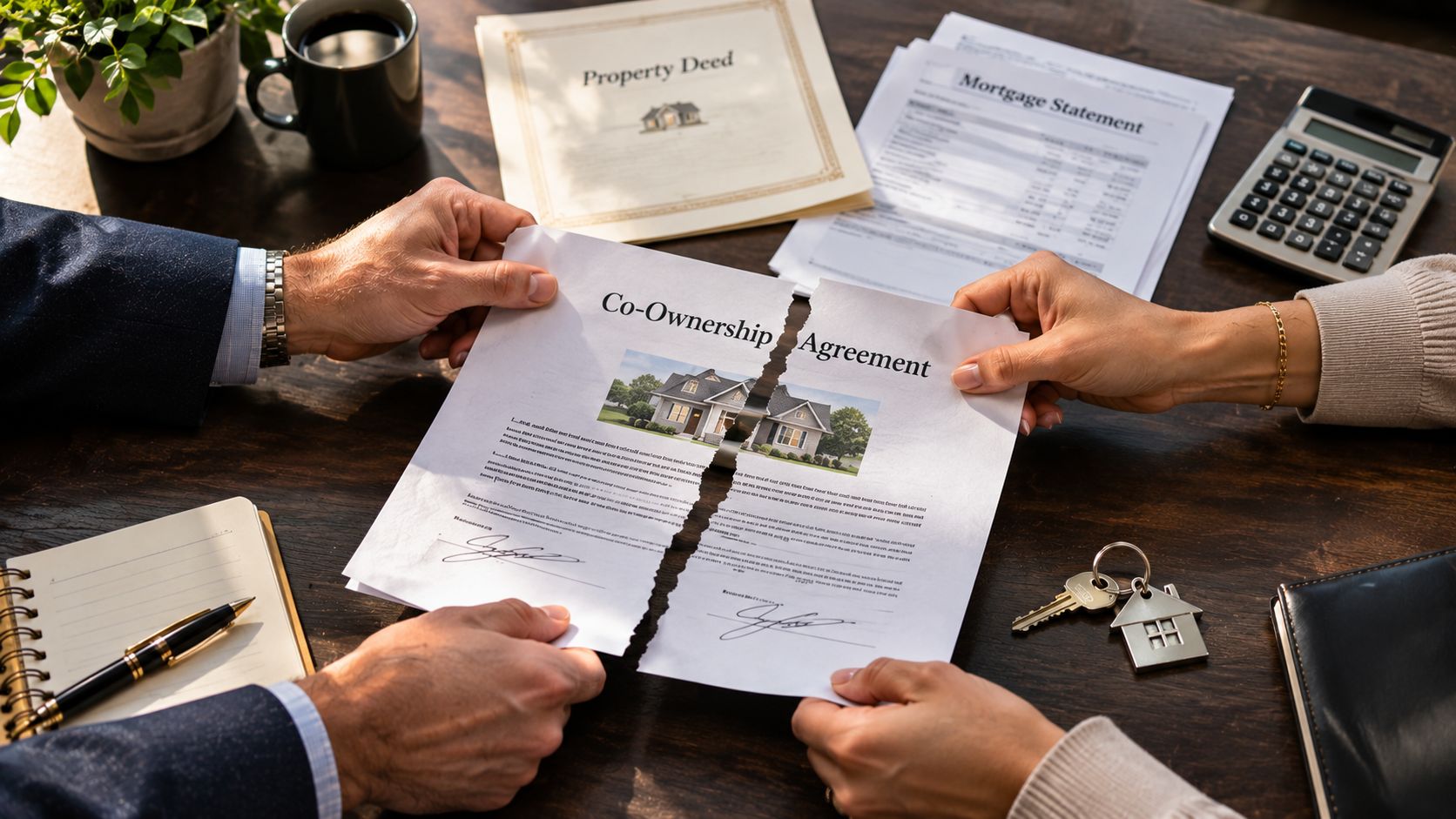
Buying property with another person can make financial sense. Couples purchase homes together before marriage, siblings inherit family property, friends combine resources to enter the housing market, and investors partner to acquire properties they might not purchase individually. When everyone pays their agreed share, the arrangement can work remarkably well. Problems begin when one co-owner stops paying. Suppose two people purchase a California property together and agree to split the mortgage equally. Several years later, one owner stops contributing. The other owner continues making the entire payment because they do not want to damage their credit or risk losing the property. After six months of paying twice their expected share, an obvious question arises: “If I’m paying the whole mortgage, shouldn’t I own more of the property?” Unfortunately, property ownership, mortgage liability, and financial contributions are not the same thing. Paying more of the mortgage does not automatically rewrite the deed, and a private disagreement between co-owners does not necessarily change what the mortgage lender is entitled to receive. Understanding those distinctions is the starting point for resolving a co-ownership mortgage dispute.
Who Is Actually Responsible for the Mortgage?
The first step is determining who signed the loan documents and who holds title to the property. These are separate questions. Title identifies ownership interests in the real estate. The mortgage or deed of trust secures repayment of the underlying loan, while the promissory note generally establishes the borrower’s repayment obligation. It is possible for ownership and loan obligations to differ depending on how the transaction was structured. Two owners may have privately agreed to split the mortgage 50/50, but that agreement does not necessarily limit the lender’s contractual rights. If both owners signed the loan documents as borrowers, the lender generally looks to those documents when determining who is responsible for payment. The California Department of Real Estate’s guidance on title and co-ownership provides a useful overview of the ways multiple parties can hold interests in California real estate. This distinction becomes particularly important after relationships deteriorate. The lender generally does not referee private disagreements about who promised to contribute what amount. The mortgage company is also unlikely to accept “my co-owner was supposed to Venmo me their half” as a substitute for the monthly payment.
What Happens If the Full Mortgage Is Not Paid?
If the required mortgage payment is not made, the consequences can extend far beyond the dispute between the owners. Depending on the loan and circumstances, missed payments may result in late charges, delinquency, credit consequences for borrowers, default notices, additional servicing expenses, and ultimately foreclosure proceedings. That means one co-owner’s refusal to contribute can place everyone’s equity at risk. Consider a property worth $1.2 million with a $600,000 outstanding mortgage. The owners may collectively have substantial equity. Allowing the mortgage to fall seriously behind because the owners are arguing over who should pay can jeopardize an asset worth far more than the disputed monthly contributions. This is why the financial dispute between co-owners and the obligation owed to the lender should be treated as separate problems.
Should You Keep Paying the Other Owner’s Share?
This is one of the most difficult practical questions. A co-owner may understandably resent paying someone else’s share month after month. At the same time, refusing to make the full payment simply because the other owner stopped contributing can create larger financial problems. Continuing payments may help protect the property, existing equity, and the paying borrower’s credit while the ownership dispute is resolved. That does not necessarily mean the nonpaying owner receives a permanent financial windfall. The California Department of Real Estate’s materials discussing co-ownership recognize that payments made by one tenant in common for the benefit of the other owners can become relevant to contribution between co-owners. Depending on the facts, expenses involving mortgage principal and interest, taxes, repairs, and other property costs may later be considered when the parties account for their respective contributions. The important word is “may.” Reimbursement depends on the ownership arrangement, circumstances, and applicable law. A co-owner should not assume that every dollar paid will automatically be recovered.
If I Pay More of the Mortgage, Do I Own More of the Property?
Usually, additional mortgage payments do not automatically change the ownership percentages stated in the deed. Suppose two people own a property equally. One owner pays 50% of the mortgage for five years and then stops contributing. The other owner pays the entire mortgage for the next two years. The deed does not automatically transform from 50/50 ownership into 60/40 or 70/30 ownership because one person paid more. However, those unequal contributions may become financially important when the owners eventually sell the property, negotiate a buyout, or become involved in a partition proceeding. This is one reason good records matter. Bank statements, mortgage statements, tax payments, insurance bills, repair invoices, rental income records, and other documentation can become important when reconstructing years of property expenses.
Can You Recover Mortgage Payments From the Other Co-Owner?
Potentially. Co-ownership disputes frequently involve an accounting between the owners to determine who paid property expenses and who received property-related benefits. Relevant expenses may include mortgage payments, property taxes, insurance, necessary repairs, and expenses required to preserve the property. The analysis may also consider rental income or other financial benefits received by an owner. The result is rarely as simple as adding up every payment made by one person and sending the other owner a bill. For example, one owner may have paid more toward the mortgage while the other paid substantial repair or property tax expenses. An investment property may also have generated rental income received by one of the owners. All of those facts can become part of the accounting.
What If One Co-Owner Lives in the Property?
The dispute can become more complicated when one co-owner occupies the property while the other lives elsewhere. Imagine two siblings inherit a house. One sibling moves into the property and initially agrees to cover the mortgage. A year later, that sibling stops paying and tells the other owner that they have no intention of moving or selling. Now the dispute involves more than a missed mortgage contribution. Questions may arise concerning occupancy, expenses, use of the property, and the future of the co-ownership arrangement. A co-owner generally should not assume that another owner can simply be treated like an ordinary tenant and evicted for failing to pay their share of the mortgage. Ownership rights and landlord-tenant rights are different legal concepts. Resolving the situation may instead require negotiation, a buyout, sale of the property, or a partition action.
Can You Force the Other Co-Owner to Sell?
When co-owners reach a point where they can no longer agree about the property, California partition law may provide a mechanism for ending the co-ownership. A California partition action asks the court to address jointly owned real property when the owners cannot agree on what should happen to it. Depending on the property and circumstances, partition can involve physical division or sale of the property followed by distribution of the proceeds. For many residential and commercial properties, physically dividing the asset is impractical. California courts have remedies for co-ownership disputes. Drawing a line through the living room and assigning each owner a bathroom is generally not the preferred one. The California Department of Real Estate’s discussion of transfers and partition provides additional background concerning partition between co-owners.
How Do Unequal Mortgage Payments Affect a Partition?
A partition case can involve more than simply selling the property and splitting the proceeds according to the percentages on the deed. Financial contributions between the owners may need to be addressed through an accounting.
Issues can include:
| Financial Issue | Why It May Matter |
| Mortgage contributions | One owner may have paid substantially more than another |
| Property taxes | Payments may have preserved the jointly owned asset |
| Insurance | One owner may have carried property-related costs |
| Necessary repairs | Expenses may have protected or maintained property value |
| Rental income | One owner may have received income belonging to the property |
| Improvements | Value and circumstances of improvements may become disputed |
The court’s treatment of these items depends on the facts. Keeping detailed records becomes particularly important when a payment dispute continues for months or years.
Can One Co-Owner Buy Out the Other?
A negotiated buyout can often resolve the dispute without requiring the property to be sold to an outside buyer. A typical negotiation may involve determining the property’s current value, outstanding loan balance, approximate equity, ownership percentages, and disputed financial contributions. The parties can then negotiate a price for one owner to acquire the other’s interest. However, transferring ownership and removing mortgage liability are separate matters. Signing a deed transferring one person’s ownership interest does not necessarily remove that person from obligations under an existing loan. Depending on the financing, refinancing, lender approval, loan assumption, or another arrangement may be necessary. A co-owner should therefore be cautious about signing away ownership while remaining personally responsible for a substantial mortgage.
What If the Property Is an Investment?
Mortgage disputes can become even more complicated when the co-owners are investors or business partners. A missed contribution may be only one part of broader real estate partnership disputes involving management authority, capital contributions, rental income, refinancing, repairs, or disagreements about when the asset should be sold. Commercial properties can add another layer because existing tenants and leases directly affect property income. Problems involving commercial lease disputes and evictions can reduce cash flow at the same time the owners are fighting over who should cover the mortgage. If the co-owners operate through a business partnership, ending the relationship may also require addressing the dissolution of the partnership separately from determining what happens to the underlying real estate.
What If the Property Was Inherited?
Inherited property is another common source of co-ownership disputes. Three siblings might inherit a family property with an existing mortgage. One wants to keep it, another wants to sell immediately, and the third lives in the property while contributing little toward expenses. Family relationships can make these disputes especially difficult because the disagreement is rarely only financial. Years of family history can suddenly become part of a conversation about property taxes and mortgage statements. Legally, however, the same fundamental questions remain important: who owns the property, who is obligated on the loan, who has paid the expenses, and what should happen to the property going forward?
Why Stopping Your Own Payments Can Backfire
When one owner stops contributing, the other may be tempted to respond in kind. “If they’re not paying, neither am I.” Emotionally, that reaction is understandable. Financially, it can be dangerous. Stopping the mortgage payment may jeopardize credit, increase fees, reduce equity, and ultimately place the property at risk of foreclosure. It may also weaken the owners’ ability to negotiate a reasonable solution because the asset itself is now in danger. The better strategy is generally to separate the lender problem from the co-owner problem. Protecting the property does not necessarily mean giving up potential claims against the other owner.
When Should a Co-Owner Speak With a Real Estate Attorney?
A missed payment does not automatically require litigation. Sometimes the problem is temporary and can be resolved through communication or a written repayment arrangement. Legal guidance becomes more important when missed contributions continue, foreclosure becomes a concern, one owner refuses to communicate, the parties disagree about selling, a buyout is being considered, or substantial unequal contributions have accumulated. At that point, the disagreement may develop into broader real estate transactions and disputes involving contribution, accounting, ownership rights, partnership issues, or partition. Early review can help determine whether negotiation, a buyout, voluntary sale, or partition provides the most practical path forward.
Final Thoughts
When one co-owner stops paying the mortgage, the consequences extend beyond an argument about monthly expenses. The lender still expects payment, the property’s equity may be at risk, and additional payments made by one owner do not automatically change the ownership percentages reflected on title. At the same time, the paying owner may have legal and financial options. Unequal contributions can become relevant during an accounting, negotiated buyout, property sale, or partition proceeding. The most important mistake to avoid is allowing frustration between co-owners to put the underlying property in unnecessary danger. Mortgage liability, ownership rights, and contribution claims are separate issues, even though they are closely connected. Protecting the property first while addressing the co-ownership dispute through negotiation or appropriate legal remedies can often preserve considerably more value than allowing a payment disagreement to become a foreclosure problem.